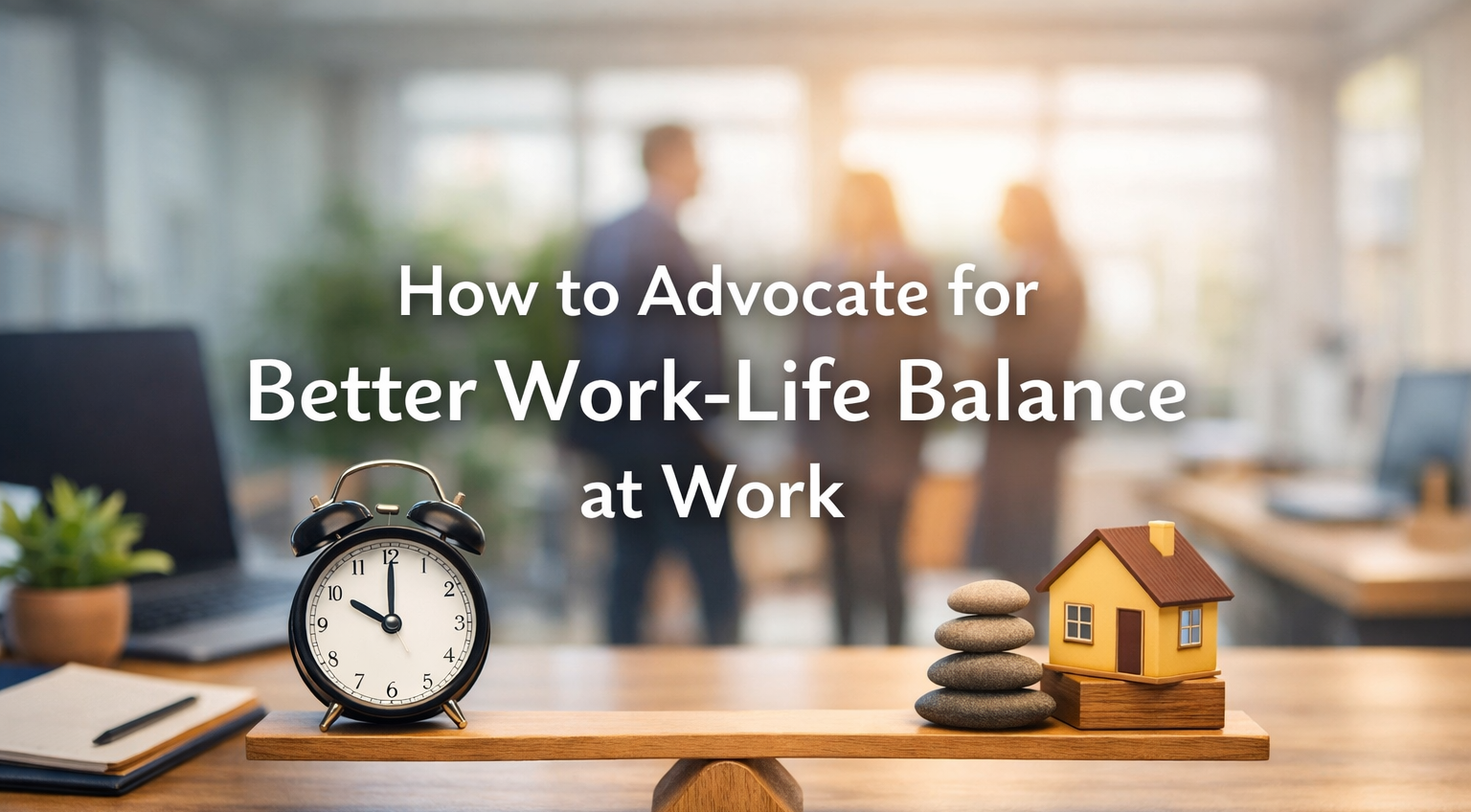
How to Advocate for Better Work-Life Balance at Work
Work-life balance is often discussed as a personal responsibility—manage your time better, prioritize tasks, or learn to say no. While those strategies help, sustainable balance is also shaped by workplace culture. Sometimes, improving balance requires speaking up and advocating for healthier expectations.
Advocating for work-life balance doesn’t mean appearing less committed. In fact, it often leads to better performance, stronger focus, and long-term productivity.
1. Start with clarity
Before raising the conversation, identify what balance means for you. Is it flexible hours, fewer after-hours messages, or realistic deadlines? Being specific helps frame the discussion as a practical improvement rather than a vague complaint.
2. Focus on outcomes, not hours
When discussing balance with managers, shift the focus from time spent to results delivered. Emphasize how sustainable schedules improve concentration, creativity, and decision-making. Organizations value performance, and positioning balance as a productivity strategy strengthens your case.
3. Use evidence and examples
Share concrete situations where workload or scheduling impacts performance or well-being. Clear examples make the conversation constructive and solution-oriented rather than emotional.
4. Propose solutions
Advocacy works best when paired with ideas. Suggest flexible scheduling, protected focus time, or clear communication boundaries. When leaders see workable solutions, they are more likely to listen.
5. Build collective awareness
Work-life balance becomes easier to address when it is a shared conversation. When colleagues openly discuss healthy boundaries and sustainable workloads, it gradually shapes workplace culture.
Advocating for balance is not about working less—it is about working in a way that allows people to stay engaged, healthy, and effective over time. When employees and organizations prioritize sustainable work habits, everyone benefits.
In the end, balance is not just a personal goal. It is a workplace practice that grows through open conversations, thoughtful boundaries, and supportive leadership.
No responses yet