Skip to content
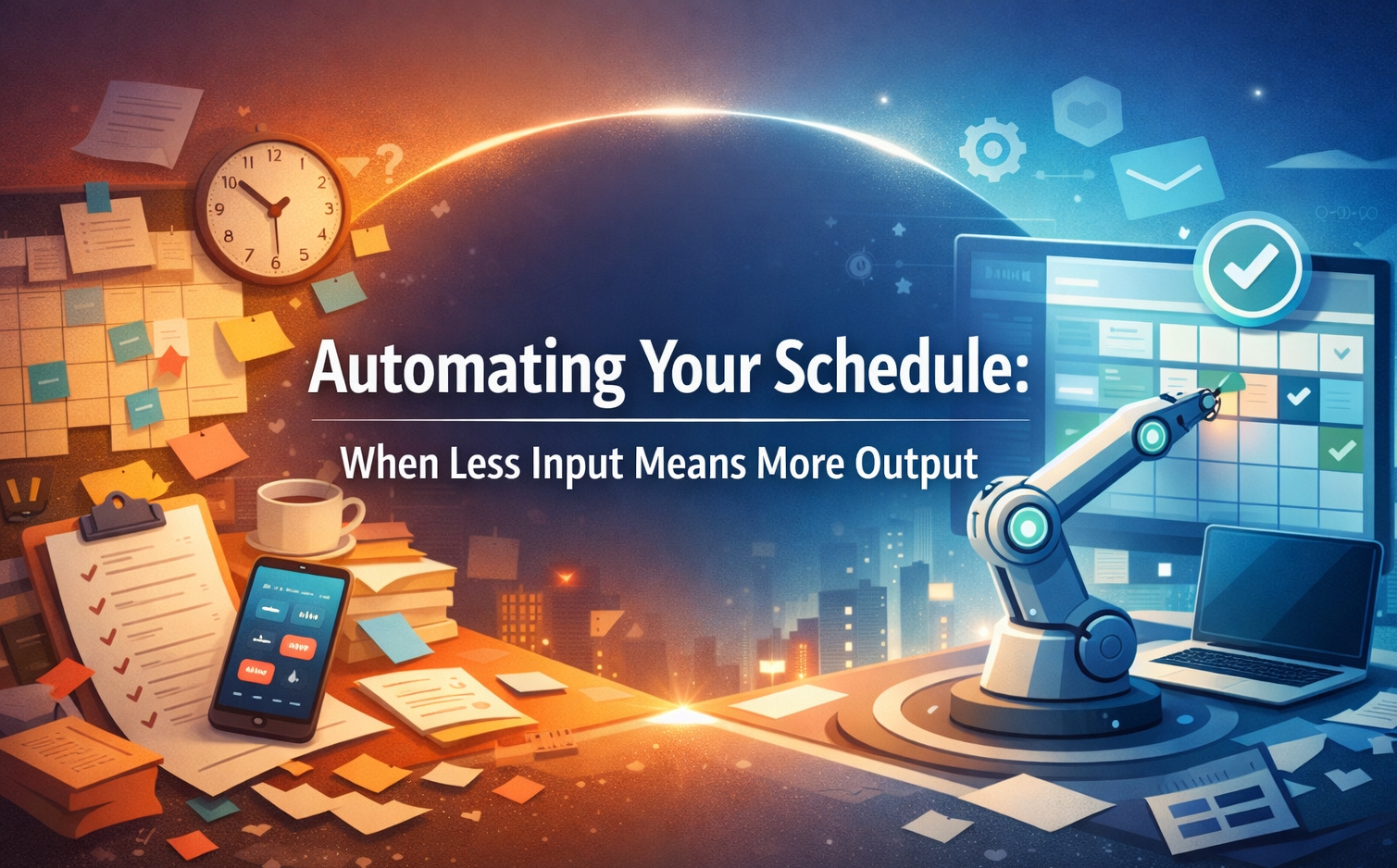
Automating Your Schedule: When Less Input Means More Output
We tend to equate productivity with effort. More hours. More decisions. More “hands-on.”
But the most effective people often do the opposite: they remove themselves from unnecessary choices.
Automation isn’t about becoming robotic — it’s about protecting your energy for the work that actually matters.
Every day, your brain spends fuel on tiny decisions: when to check email, what to work on next, how to schedule meetings, when to take breaks. Individually, they seem harmless. Collectively, they drain focus and create friction.
Automating your schedule means designing default rhythms so you don’t have to negotiate with yourself all day long.
This can be as simple as:
-
Blocking specific times for deep work and shallow work
-
Automating recurring meetings and reviews
-
Setting fixed windows for email and messages
-
Using tools to pre-plan tasks and reminders
When these decisions are made once — in advance — your mind stays clearer in the moment.
The payoff isn’t just efficiency. It’s mental space.
Less context switching. Less fatigue. More presence.
Ironically, structure creates freedom. When your schedule runs on well-designed systems, you stop reacting and start creating.
Automation doesn’t replace intention — it reinforces it.
By letting systems handle the predictable, you free yourself to focus on what requires judgment, creativity, and human insight.
Less input.
More output.
And far more energy left at the end of the day.
No responses yet