How Kindness Can Rewire Your Brain
Kindness is often seen as a moral choice or a social virtue. But science shows it is also something much deeper—it can literally change how your brain works.
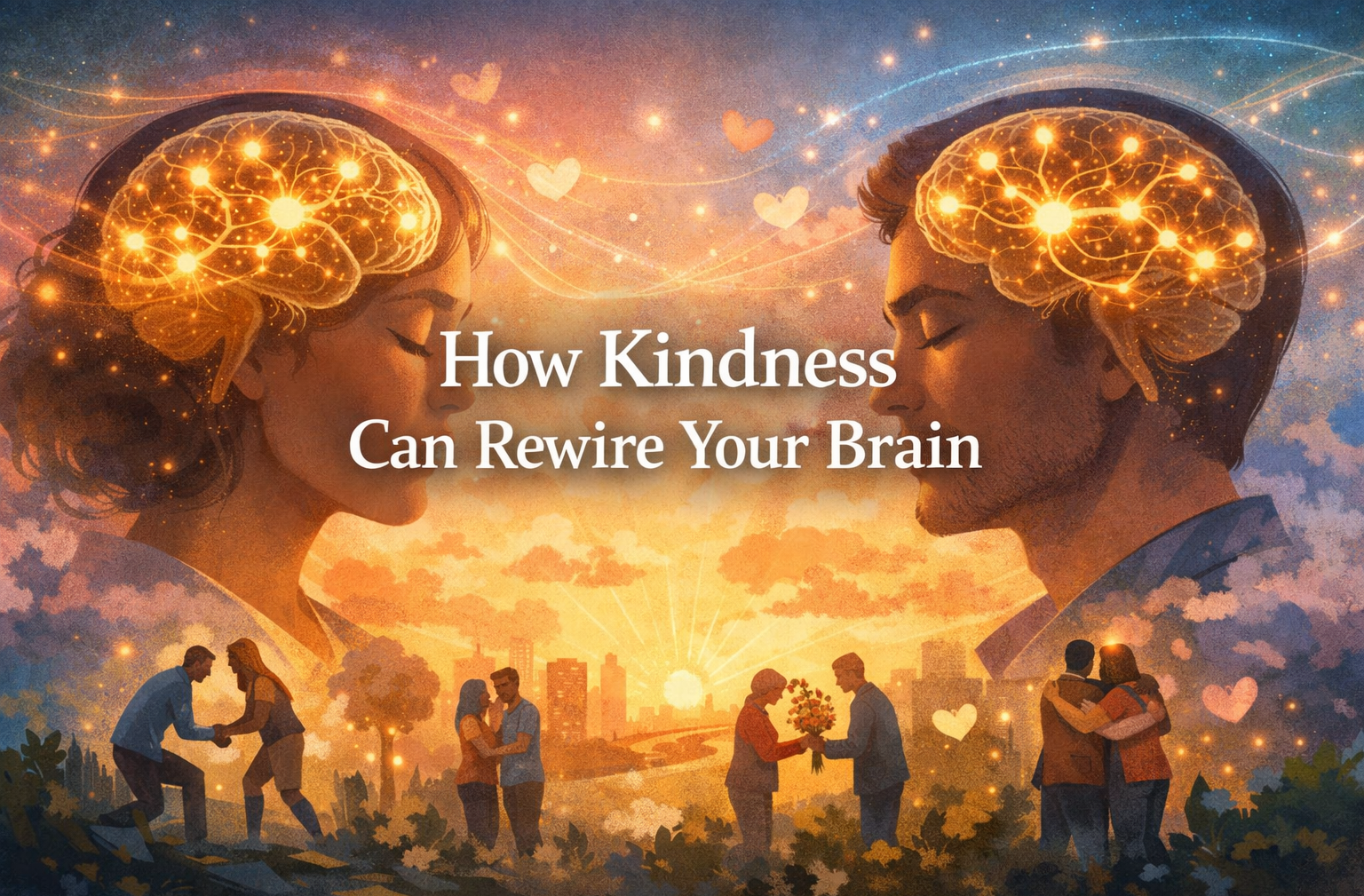
Every act of kindness triggers activity in areas of the brain linked to pleasure, connection, and trust. When you help someone, your brain releases chemicals like dopamine, oxytocin, and serotonin. These are the same “feel-good” chemicals associated with happiness and emotional bonding.
In simple terms, kindness rewards the brain.
Over time, repeated acts of kindness can strengthen neural pathways related to empathy and compassion. The brain becomes more responsive to others’ emotions and more inclined to act supportively. Just like a muscle grows stronger with use, the brain becomes better at kindness the more it practices it.
This also affects stress. Studies show that helping others can reduce the body’s stress response. Kindness activates regions of the brain that calm fear and threat signals, lowering anxiety and promoting emotional stability.
There is also a powerful feedback loop. When people experience kindness, they are more likely to pass it on. This means one small action can influence an entire social network. In this way, kindness spreads not just socially but neurologically.
Importantly, kindness doesn’t have to be dramatic. Small gestures matter. A sincere compliment. A moment of patience. Listening without interrupting. Checking in on someone who might be struggling.
These actions may feel ordinary, but to the brain they are meaningful signals of safety and connection.
In a world that often rewards speed, competition, and productivity, kindness might seem secondary. Yet neuroscience suggests the opposite. Kindness supports mental health, strengthens relationships, and builds more resilient communities.
The remarkable part is that anyone can practice it. You don’t need special training, resources, or authority. Just intention.
Every time you choose kindness, you are not only helping someone else—you are quietly reshaping your own mind.
And over time, that small choice can change more than you might expect.
No responses yet