Skip to content
Gamification in Hiring: Can It Improve Candidate Assessment?
Hiring has long relied on CVs, interviews, and gut instinct. But as roles become more complex and talent markets more competitive, many organizations are asking a new question: Is there a better way to assess candidates? Enter gamification in hiring.
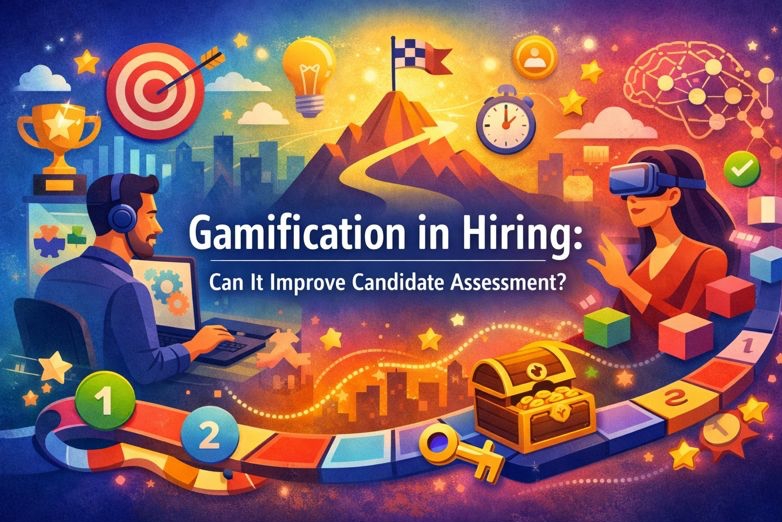
Gamification applies game-based elements—such as challenges, simulations, and scoring systems—to recruitment and assessment. Instead of only telling employers what they can do, candidates show it in real time.
Why companies are exploring gamified hiring
Traditional assessments often measure how well a candidate prepares for interviews, not how they actually perform on the job. Gamified tools, on the other hand, can evaluate problem-solving, decision-making, adaptability, collaboration, and even stress response in realistic scenarios.
For candidates, gamification can reduce anxiety and create a more engaging experience. It shifts the dynamic from interrogation to interaction, allowing individuals to demonstrate strengths that might not appear on a CV—especially early-career professionals or career switchers.
What gamification gets right
When designed well, gamified assessments can:
-
Provide objective, data-driven insights
-
Reveal behavioral and cognitive skills
-
Reduce unconscious bias tied to background or presentation style
-
Improve employer brand and candidate engagement
It also helps hiring teams move beyond credentials and focus on capability.
Where caution is needed
Gamification is not a silver bullet. Poorly designed games can favor certain personality types, cultural backgrounds, or gaming familiarity. There’s also a risk of overvaluing speed and competition at the expense of reflection and depth.
Most importantly, gamification should complement, not replace, human judgment. Context, conversation, and values alignment still matter.
The bottom line
Gamification can absolutely improve candidate assessment—but only when it’s intentional, inclusive, and aligned with the role. Used thoughtfully, it helps employers see candidates as more than résumés and gives candidates a fairer chance to show what they can really do.
Hiring isn’t a game—but assessing potential might benefit from playing one.
No responses yet