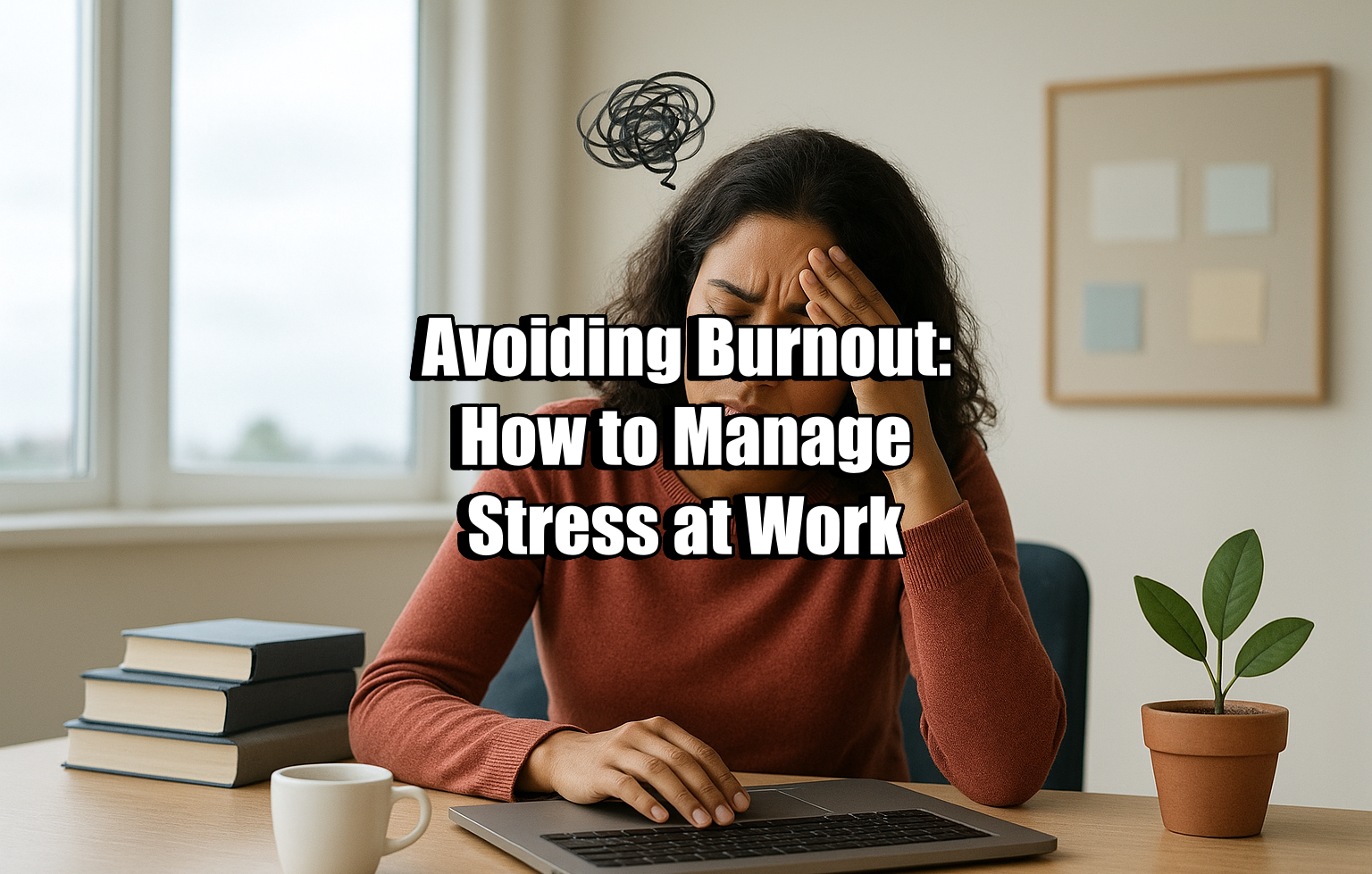
Avoiding Burnout: How to Manage Stress at Work
Burnout is more than just feeling tired — it’s a state of emotional, mental, and physical exhaustion caused by prolonged stress. In today’s fast-paced workplaces, where constant deadlines, digital overload, and high expectations have become the norm, managing stress isn’t just a wellness goal — it’s a survival skill.
Here’s how to protect your energy and stay balanced at work:
1. Recognize the Early Signs
Burnout doesn’t happen overnight. It builds gradually — through chronic fatigue, irritability, decreased motivation, or a sense of detachment from your work. By identifying these signs early, you can take proactive steps before stress escalates.
2. Set Boundaries
Work-life boundaries are essential for mental well-being. Avoid answering work messages during personal time, learn to say no when needed, and create a clear separation between your work and rest spaces — even if you work remotely.
3. Prioritize and Delegate
Not every task deserves the same level of urgency. Learn to distinguish between what’s important and what’s merely urgent. Delegate tasks when possible and focus your energy where it has the greatest impact.
4. Take Meaningful Breaks
A five-minute pause to stretch, breathe, or step outside can reset your mind and boost productivity. Studies show that short, intentional breaks enhance focus, creativity, and mood throughout the day.
5. Cultivate Supportive Relationships
A healthy work culture depends on connection. Talk to colleagues, mentors, or HR about your workload. Sharing your experiences can relieve emotional strain and remind you that you’re not alone.
6. Practice Self-Care Beyond Work
Engage in activities that replenish your energy — exercise, journaling, mindfulness, or spending time with loved ones. These aren’t luxuries; they’re vital tools for resilience.
7. Reconnect with Purpose
When work feels overwhelming, it’s easy to lose sight of why you do it. Revisit your goals and values to remind yourself of the bigger picture. Purpose-driven work can reignite motivation and reduce feelings of emptiness.
Final Thought:
Avoiding burnout isn’t about working less — it’s about working smarter and living better. When you prioritize well-being, productivity follows naturally.
No responses yet